India Gate Delhi Vector Art: A Definitive Guide to High-Contrast Monochrome Illustrations
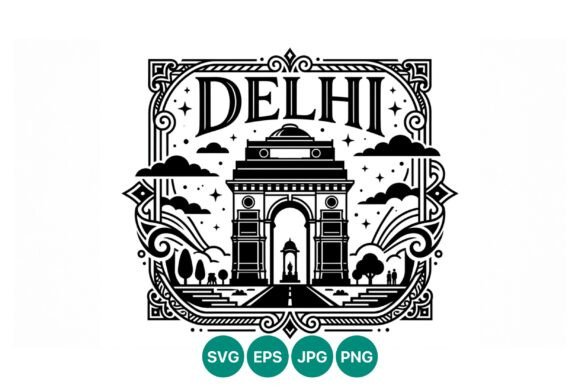
The architectural grandeur of the India Gate stands as a silent sentinel in the heart of New Delhi, commemorating the soldiers of the British Indian Army who died in World War I and the Third Anglo-Afghan War. For designers, educators, and digital creators, capturing this monument's essence requires more than just a photograph; it demands a stylized interpretation that conveys history, emotion, and cultural significance. This is where India Gate Delhi Vector Art becomes an indispensable asset. Specifically, a black and white vector illustration featuring the landmark surrounded by decorative ornamental borders, stylized clouds, stars, and tree silhouettes offers a unique aesthetic that transcends simple documentation.
This specific style of artwork leverages high-contrast techniques to create a timeless visual narrative. By stripping away color, the focus shifts entirely to form, line weight, and composition. The inclusion of elements like stylized clouds and tree silhouettes adds depth and context, transforming a static building into a living scene. When such artwork is available as a 100% vector file—scalable without loss of quality—it opens up a myriad of possibilities for professionals across various industries. Whether you are designing a commemorative poster, creating educational materials, or branding a heritage tourism campaign, understanding the utility and application of these digital assets is crucial for achieving professional results.
The Aesthetic Power of Black and White Monumental Design
In the realm of graphic design, the choice between color and monochrome is rarely arbitrary. Black and white vector illustrations possess a distinct authority and clarity that colored images often lack. When applied to a subject as historically weighty as the India Gate, the absence of color forces the viewer to engage with the structure itself. The stark contrast between the dark ink and the white background mimics the dramatic lighting of dawn or dusk, times when the monument is most visually striking in reality.
The specific design elements mentioned—the decorative ornamental border, stars, and clouds—serve a dual purpose. First, they frame the subject, drawing the eye directly to the archway of the gate. Second, they evoke a sense of reverence and celebration. Stars often symbolize valor and memory, while the stylized clouds suggest the passage of time and the vastness of the sky above the capital city. Tree silhouettes ground the image, providing a sense of scale and reminding the viewer of the lush gardens that surround the actual site.
This high-contrast approach is particularly effective for print media. In screen printing, engraving, or large-format signage, complex gradients can be lost or muddy. A crisp, black and white vector ensures that every line remains sharp, regardless of the medium. The ornamental border acts as a container for the narrative, suggesting that what lies within is a story worth preserving. This stylistic choice aligns perfectly with modern minimalist trends while retaining a classic, vintage feel that resonates with audiences appreciative of historical artistry.
Technical Superiority of Scalable Vector Graphics
One of the primary reasons professionals seek out India Gate Delhi Vector Art rather than raster-based images is the inherent scalability of vector formats. Raster images, such as standard JPEGs or PNGs, are composed of pixels. When enlarged beyond their original resolution, they become pixelated and blurry. In contrast, vector graphics are defined by mathematical equations describing lines, curves, and shapes. This means a vector file can be scaled from a small business card to a massive billboard without any degradation in quality.
The availability of the artwork in multiple formats within a single ZIP folder—specifically SVG, PNG, JPG, and EPS—cater to different technical workflows. SVG (Scalable Vector Graphics) is ideal for web use, ensuring fast loading times and perfect rendering on all devices. EPS (Encapsulated PostScript) is the industry standard for professional print production, allowing for precise color separation and high-resolution output. While the core asset is vector-based, the inclusion of PNG and JPG previews allows for quick integration into presentations or social media posts where vector editing is not required.
For architects and urban planners, the ability to manipulate the vector paths is invaluable. They can isolate specific components, such as the tree silhouettes or the ornamental border, to integrate them into larger diagrams or maps. The precision of the vector lines ensures that even at microscopic scales, the details of the India Gate's facade remain legible. This technical versatility makes the asset a future-proof investment for any creative project involving Indian heritage landmarks.
Practical Applications Across Industries
The versatility of this specific black and white vector illustration extends far beyond simple decoration. Its clean lines and symbolic imagery make it suitable for a wide array of practical applications across diverse sectors.
- Educational Materials: Teachers and researchers can utilize these vectors to create engaging history textbooks, worksheets, and presentation slides. The simplified yet detailed nature of the illustration helps students visualize the monument without the distraction of photographic clutter. The surrounding stars and clouds can be used to discuss symbolism and artistic representation in history lessons.
- Tourism and Hospitality: Hotels, travel agencies, and tour operators in Delhi can incorporate this art into brochures, luggage tags, and website banners. The high-contrast style stands out in marketing collateral, offering a sophisticated alternative to generic stock photos. It evokes a sense of elegance and tradition, appealing to international travelers seeking authentic cultural experiences.
- Merchandise and Apparel: The black and white format is perfect for t-shirt printing, tote bags, and mugs. Screen printers prefer high-contrast designs because they require fewer screens and less ink, reducing production costs while maintaining a bold look. The ornamental border provides a natural frame that looks intentional and designed, rather than pasted on.
- Corporate Branding: Companies involved in real estate, construction, or government relations may use the India Gate as a subtle nod to stability and heritage. Incorporating the vector art into letterheads, annual reports, or office decor signals a connection to the nation's capital and its history.
- Digital Media and Web Design: Web designers can use the SVG version for responsive backgrounds, icons, or hero images. Because SVG files are lightweight, they do not slow down page load speeds, which is critical for SEO and user experience. The transparent background options allow for seamless integration into various website layouts.
Enhancing Visual Storytelling with Contextual Elements
A common pitfall in landmark illustration is presenting the building in isolation, devoid of atmosphere. The inclusion of contextual elements like stylized clouds and tree silhouettes addresses this issue effectively. These elements provide a narrative layer to the image. The trees suggest the sprawling Rashtrapati Bhavan lawns nearby, grounding the monument in its physical environment. The clouds add movement to an otherwise static structure, implying the changing weather and seasons over the decades.
Furthermore, the decorative ornamental border serves as a framing device that elevates the status of the subject. It suggests that the image is not merely a snapshot but a curated piece of art. This framing technique is particularly useful in editorial design, where space needs to be filled elegantly. It allows designers to create cohesive layouts where text can flow around the border or sit within the negative space created by the stars and clouds.
When creating a series of images, such as a set of posters for different Indian monuments, maintaining a consistent style is key. Using a template that includes these specific decorative elements ensures visual unity across the collection. The high-contrast nature of the black and white palette guarantees that the series looks uniform, whether printed on glossy paper or displayed on a matte screen.
Workflow Integration for Creators and Professionals
Integrating India Gate Delhi Vector Art into a professional workflow is straightforward, thanks to the comprehensive file package provided. Upon downloading the ZIP folder, users gain immediate access to files compatible with major design software suites like Adobe Illustrator, CorelDRAW, and Inkscape.
For a designer starting a new project, the process typically begins with importing the EPS or SVG file into their preferred vector editor. From there, the layers can be separated. The base illustration of the India Gate might be on one layer, while the clouds, stars, and trees occupy others. This layering allows for non-destructive editing. A designer might choose to remove the trees for a specific layout or adjust the density of the stars to match a client's mood board.
The high-contrast nature of the artwork also simplifies the coloring process if color is eventually desired. Since the base is a solid black silhouette, applying flat colors or gradients is much easier than trying to recolor a complex photograph. Designers can experiment with duotones, adding a splash of saffron or green to the border while keeping the monument monochrome, creating a striking focal point.
For those working in print, the EPS file ensures that the artwork meets the strict resolution requirements of commercial printers. There is no need to worry about DPI (dots per inch) issues, as vectors are resolution-independent. This reliability saves time during the pre-press stage, reducing the likelihood of errors and reprints. The ability to scale the artwork to fit any size requirement—from a postage stamp to a skyscraper wrap—makes it a highly efficient resource for businesses looking to minimize design turnaround time.
Considerations for Cultural Sensitivity and Accuracy
While the artistic license allows for stylization, accuracy in depicting national landmarks is paramount. The India Gate is a protected monument and a symbol of national pride. Any vector art representing it must respect its architectural integrity. The proportions of the arch, the inscriptions, and the overall silhouette should remain true to the actual structure, even when rendered in a stylized manner.
The addition of decorative elements like stars and clouds should enhance, not obscure, the monument. The goal is to honor the legacy of the site. In educational contexts, it is important to ensure that the accompanying text or usage of the image aligns with historical facts. The black and white style, while artistic, should not be used in ways that trivialize the memorial aspect of the gate. Responsible usage involves understanding the emotional weight of the subject matter and treating the digital asset with the same respect as the physical monument.
Moreover, the versatility of the vector format allows for adaptations that suit different cultural contexts. For instance, the ornamental border could be customized to reflect specific regional patterns if the artwork is being used for a localized campaign, while still maintaining the central image of the India Gate. This flexibility ensures that the art remains relevant and respectful across various applications.
Conclusion on the Value of Digital Heritage Assets
The demand for high-quality, versatile digital assets continues to grow as the line between traditional art and digital design blurs. A black and white vector illustration of the India Gate, complete with decorative borders and atmospheric elements, represents the perfect intersection of historical reverence and modern utility. It offers a solution that is technically robust, aesthetically pleasing, and culturally significant.
By choosing vector formats like SVG and EPS, creators ensure that their work remains sharp and scalable for years to come. The high-contrast style not only appeals to contemporary design sensibilities but also pays homage to the enduring strength of the monument itself. Whether used for education, commerce, or personal expression, this type of India Gate Delhi Vector Art empowers users to tell compelling stories about India's rich heritage with clarity and impact. As digital platforms evolve, the ability to access and manipulate such premium resources will remain a cornerstone of effective visual communication.