Train Steam Engine Vector Art: A Timeless Design Resource
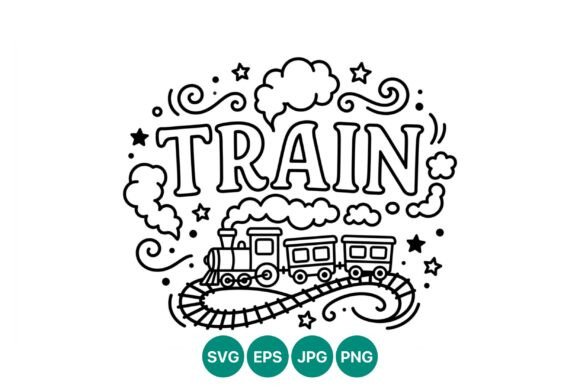
In the evolving landscape of digital design, there is a distinct charm found in the mechanical elegance of the past. The Train Steam Engine Vector Art collection captures this nostalgia perfectly, offering a monochrome vector art piece that depicts a steam train with two carriages navigating curved tracks. Surrounded by stars and decorative swirls, with smoke clouds billowing into the sky, this artwork stands as a high-contrast black and white masterpiece. For designers, illustrators, and business owners looking to infuse their projects with a sense of history and movement, understanding the utility and versatility of such assets is crucial.
The Essence of Monochrome Steam Locomotive Design
At its core, this specific piece of Train Steam Engine Vector Art relies on the power of simplicity. By stripping away color, the design forces the viewer to focus on form, line weight, and composition. The monochrome palette—strictly black and white—creates a dramatic visual impact that works universally across various backgrounds. The image features a classic steam engine pulling two carriages along a set of curved tracks, suggesting motion and journey even in a static format.
The surrounding elements add layers of narrative depth. Stars scattered around the locomotive imply a night journey or a dreamlike quality, while decorative swirls provide an ornamental frame that softens the industrial nature of the train. The smoke clouds are rendered with fluid lines, adding texture and dynamism. This combination of industrial machinery and whimsical decoration creates a unique aesthetic that bridges the gap between vintage engraving styles and modern graphic design.
Why High Contrast Matters in Vector Graphics
One of the defining characteristics of this artwork is its high-contrast rendering. In design theory, high contrast ensures legibility and visual punch. When you download the Train Steam Engine Vector Art, you are acquiring an asset where the difference between the black ink and the white space is maximized. This makes the image incredibly versatile for applications where clarity is paramount, such as logos, stamps, or large-scale signage.
Unlike raster images (such as standard JPEGs) which can become pixelated when enlarged, the vector nature of this file means the lines remain crisp regardless of scale. Whether you need a tiny icon for a website footer or a massive mural for a factory wall, the sharpness of the steam engine, the curves of the tracks, and the intricate details of the smoke clouds will remain intact. This scalability is the primary reason why professionals prefer SVG and EPS formats for critical branding work.
Practical Applications for Creators and Businesses
The utility of Train Steam Engine Vector Art extends far beyond simple decoration. Its thematic elements of travel, history, and industry make it suitable for a wide array of real-world scenarios. Understanding where to apply this asset can significantly enhance the storytelling capability of your projects.
- Railway Heritage and Museums: Organizations dedicated to preserving railway history often require imagery that evokes the golden age of rail travel. This monochrome style fits seamlessly into brochures, event posters, and exhibit signage, providing an authentic look without the distraction of modern colors.
- Educational Materials: Teachers and content creators producing materials about transportation history or physics can use the clear, detailed lines of the steam engine to illustrate concepts like steam pressure, traction, and historical engineering milestones.
- Apparel and Merchandise: The high-contrast nature of the design makes it ideal for screen printing on t-shirts, tote bags, and hats. The black and white scheme ensures that the print remains clean and durable, appealing to fans of steampunk aesthetics or vintage travel themes.
- Wedding and Event Stationery: The romantic connotation of a "night train" surrounded by stars makes this artwork a popular choice for wedding invitations, particularly for couples who love travel or have a vintage theme. The decorative swirls complement elegant typography beautifully.
- Digital Interfaces and Web Design: Web developers can utilize the SVG format to create responsive background elements or loading animations. Because vectors are lightweight compared to high-resolution photos, they load quickly, improving site performance while maintaining visual appeal.
Technical Advantages of the Included File Formats
When you acquire this Train Steam Engine Vector Art, the download includes a comprehensive ZIP folder containing multiple file types: SVG, PNG, JPG, and EPS. Each format serves a specific purpose, ensuring that the artwork is ready for any workflow.
- SVG (Scalable Vector Graphics): This is the most flexible format for web use. It allows the steam train illustration to be styled with CSS, animated, and scaled infinitely without losing quality. It is the preferred choice for responsive web design.
- EPS (Encapsulated PostScript): Ideal for professional print production. If you are working with a commercial printer for large banners or packaging, the EPS file ensures that the vector paths are preserved for the highest possible output resolution.
- PNG (Portable Network Graphics): A raster version with transparency support. This is useful when you need to place the train over a colored background in a non-vector editing environment, such as basic photo editors or social media tools.
- JPG (Joint Photographic Experts Group): A compressed raster format suitable for quick previews, email attachments, or situations where file size is more critical than editability.
Having all these formats in one package eliminates the need for conversion, saving time and preventing potential data loss during file translation. The inclusion of 100% vector SVG and EPS files guarantees that the sharp results you see in the preview are exactly what you get in your final project.
Evaluating Suitability for Your Project
While the Train Steam Engine Vector Art is highly versatile, it is important to evaluate whether it aligns with your specific project goals. Consider the following factors before integrating it into your design:
Brand Alignment: Does the vintage, monochromatic aesthetic match your brand identity? If your brand is ultra-modern and minimalist, this ornate style might feel out of place unless used ironically or as a specific nod to heritage. However, for brands emphasizing craftsmanship, tradition, or adventure, it is a perfect fit.
Color Constraints: Since the artwork is strictly black and white, it may require additional design work if your project demands a full-color palette. You can easily recolor the vector paths in software like Adobe Illustrator or Inkscape, but if you need a photorealistic, multi-colored scene immediately upon download, this monochrome approach might require extra steps.
Contextual Relevance: Ensure the imagery supports your message. Using a steam train in a context unrelated to travel, history, or industry could confuse the audience. The stars and swirls add a touch of fantasy; ensure this doesn't clash with a serious corporate tone unless intended.
Overcoming Limitations with Creative Adaptation
No single asset is a universal solution, and Train Steam Engine Vector Art is no exception. One limitation is the fixed composition; the train is moving on curved tracks in a specific direction. While vector files allow for manipulation, fundamentally changing the layout (e.g., straightening the tracks or reversing the train's direction) requires advanced vector editing skills.
However, these limitations can be turned into strengths. The fixed composition provides a strong focal point, reducing the cognitive load on the viewer. The monochrome restriction encourages creativity in how the image is presented—through texture overlays, lighting effects, or strategic placement against vibrant backgrounds. By treating the vector art as a foundational element rather than a finished product, designers can create unique variations that stand out in a crowded digital space.
Real-World Success Stories
Consider a small bakery owner who wanted to rebrand with a "journey of flavors" theme. They utilized the Train Steam Engine Vector Art as the central logo element. By keeping the black and white design on kraft paper packaging, they achieved a rustic, artisanal look that resonated with customers seeking traditional baking methods. The smoke clouds were interpreted as rising steam from fresh bread, creating a clever visual pun that enhanced customer engagement.
Another example involves a tech startup focusing on logistics software. They used the SVG version of the train to symbolize "moving forward" and "reliable transport." By animating the wheels and smoke in their website header, they brought the static vector to life, demonstrating how old-school imagery can be modernized through digital interactivity.
Conclusion: A Versatile Asset for Modern Designers
The Train Steam Engine Vector Art offers more than just a picture of a locomotive; it provides a robust tool for visual communication. With its high-contrast monochrome style, intricate details of the steam engine and carriages, and the atmospheric addition of stars and swirls, it serves as a bridge between historical appreciation and contemporary design needs.
Whether you are a professional designer needing scalable EPS files for print, a web developer requiring lightweight SVGs, or a business owner looking to add character to your merchandise, this resource delivers value through its flexibility and quality. By understanding the strengths of vector graphics and the specific aesthetic of this artwork, you can leverage it to create compelling, memorable designs that resonate with audiences across various platforms. The availability of multiple file formats ensures that the transition from concept to execution is smooth, efficient, and visually striking.