Evaluating Hand Drawn Coloring Book Mandalas for Creative Projects
In the realm of adult coloring and digital design, the quality of line art is often the deciding factor between a frustrating experience and a deeply satisfying creative session. Hand Drawn Coloring Book Mandalas represent a specific category of artistic resources that prioritize organic flow, high-contrast outlines, and intricate detail. Unlike vector-generated patterns that can sometimes feel rigid or mathematically perfect to a fault, these designs capture the subtle imperfections and rhythmic variations of human creativity. For adults aged 20 to 50 who are curating content for personal relaxation, creating print-on-demand products, or designing scrapbook layouts, understanding the nuances of this format is essential for making informed decisions.
The Distinctive Nature of Hand Drawn Line Art
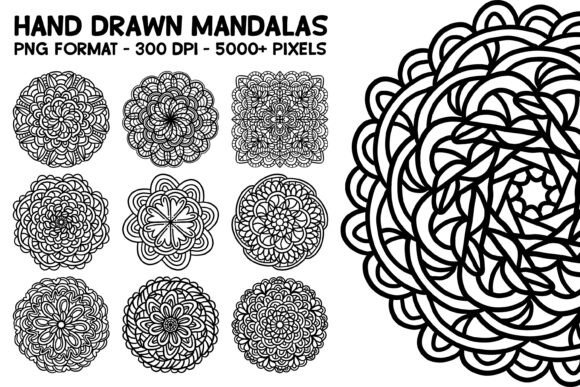
The primary distinction of Hand Drawn Coloring Book Mandalas lies in their origin and execution. These designs are crafted manually, often using traditional tools before being digitized into high-resolution formats. This process results in lines that possess a unique texture and weight variation. When you examine a hand-drawn mandala closely, you will notice that the strokes breathe; they do not maintain a uniform thickness from start to finish unless intentionally designed to do so. This organic quality translates well into physical coloring mediums like colored pencils and markers, as the varying line weights help define depth and shadow naturally.
Furthermore, the "clean, crisp black line art" characteristic of these sets ensures that the focus remains entirely on the form and pattern. The high contrast between the bold black outlines and the transparent background eliminates visual noise, allowing colorists to work with precision. This clarity is particularly beneficial for those using digital tools, where clean edges prevent bleeding or pixelation during rendering. The result is a resource that feels both professional and approachable, bridging the gap between complex geometric art and accessible hobbyist materials.
Comparing Formats: Hand Drawn vs. Vector and Digital Generations
When evaluating options for coloring pages or design elements, it is helpful to compare Hand Drawn Coloring Book Mandalas against other common formats, such as vector-based illustrations or AI-generated patterns. Each approach offers different strengths and tradeoffs depending on the intended application.
- Vector Graphics: Vector files are created using mathematical equations, resulting in infinitely scalable images with perfectly smooth curves. While excellent for logos and large-scale printing, vector mandalas can sometimes lack the textural warmth of hand-drawn art. They may appear too sterile for projects aiming to evoke mindfulness or a personal touch.
- AI-Generated Patterns: Artificial intelligence has made it easy to generate complex mandala-like structures instantly. However, these designs often suffer from logical inconsistencies, such as overlapping lines that do not connect properly or impossible geometries. Hand Drawn Coloring Book Mandalas avoid these pitfalls because every connection point is verified by a human artist, ensuring a coherent and colorable structure.
- Photographic Textures: Some coloring resources use scanned textures or watercolor washes as backgrounds. While artistic, these can complicate the coloring process by introducing unintended colors or shading. The clean, transparent PNG format of hand-drawn sets provides a neutral canvas, giving the user full control over the final aesthetic.
The choice often comes down to the desired emotional resonance. If the goal is technical perfection and scalability without limit, vectors may suffice. However, if the objective is to create an engaging, tactile experience for a human colorist, the human element found in hand-drawn designs is superior.
Technical Specifications and Print Quality
For professionals and hobbyists alike, resolution is a critical decision factor. A common limitation in many free or low-cost online resources is the image resolution, which often leads to blurry or pixelated prints when enlarged. Hand Drawn Coloring Book Mandalas typically address this by providing files at 300 DPI (dots per inch) with dimensions reaching up to 5000 pixels in height. This specification is the industry standard for high-quality offset and home printing.
At 300 DPI, the fine details of the mandala—such as tiny floral motifs, geometric intersections, and delicate filigree—remain sharp and distinct even when printed on large paper sizes like A4 or Letter. This level of fidelity is crucial for creators publishing via platforms like Amazon KDP (Kindle Direct Publishing) or selling printable packs. Low-resolution images can ruin a product's reputation, leading to customer dissatisfaction due to jagged edges or fuzzy lines. By investing in high-resolution assets, creators ensure that the final output matches the quality seen on their screens.
Additionally, the use of transparent PNG files offers significant flexibility. Unlike JPEGs, which embed a white background, PNGs allow the artwork to be layered over any surface. This feature is invaluable for scrapbooking, where a mandala might need to sit atop a textured paper background, or for digital designers integrating the art into web graphics, social media posts, or merchandise mockups. The ability to manipulate the background without altering the integrity of the line art streamlines the workflow for multi-format projects.
Use Cases: From Mindfulness to Commercial Products
The versatility of these designs makes them suitable for a wide range of scenarios, but they excel most in specific contexts. Understanding these use cases helps determine whether this resource fits your current needs.
Adult Coloring Books and KDP Publishing
For entrepreneurs looking to enter the self-publishing market, Hand Drawn Coloring Book Mandalas provide a ready-made foundation. The consistent style across a collection allows for the creation of cohesive books that appeal to a specific audience. The bold outlines are particularly advantageous here, as they accommodate various coloring mediums. Users of thick markers will appreciate the defined spaces that prevent ink bleed-through, while pencil enthusiasts benefit from the detailed areas that require shading techniques. The high resolution ensures that the book looks professional once printed, meeting the expectations of discerning buyers.
Mindfulness and Therapeutic Activities
Beyond commercial applications, these mandalas serve as powerful tools for stress reduction and mindfulness. The repetitive, symmetrical nature of mandalas is known to induce a meditative state. However, the complexity must be balanced. Designs that are too chaotic can cause frustration, while those that are too simple may fail to engage. The curated nature of hand-drawn collections often strikes this balance, offering varying levels of difficulty within a single set. This makes them ideal for therapists, wellness coaches, or individuals seeking a structured way to decompress after a long day.
Crafts, Scrapbooking, and DIY Projects
The transparent format opens doors for physical crafting. Hobbyists can print these mandalas onto cardstock, vinyl, or transfer paper to create custom stickers, invitations, or decorative wall art. Because the lines are crisp, they cut cleanly if used with die-cutting machines, provided the file is converted appropriately. This adaptability means a single download can fuel dozens of different creative projects, from holiday cards to personalized gifts.
Decision Factors: When to Choose Hand Drawn Options
While Hand Drawn Coloring Book Mandalas offer numerous advantages, they may not be the right fit for every situation. It is important to weigh the benefits against potential limitations based on your specific goals.
Choose this option if:
- You prioritize a warm, organic aesthetic over mechanical precision.
- You require high-resolution files for professional printing (300 DPI).
- You need flexible formats (transparent PNG) for layering in design software.
- Your target audience includes adult colorists who value detail and variety.
- You are creating content for mindfulness, education, or therapeutic purposes.
Consider alternatives if:
- You need fully editable vector paths (SVG/EPS) to change shapes or colors programmatically.
- Your project requires extreme scalability beyond standard print sizes (e.g., billboard advertising).
- You are looking for a specific theme that is not covered in general mandala collections.
- Budget constraints are tight and you can accept lower resolution or watermarked samples.
Final Considerations for Creators
Selecting the right art assets is a foundational step in any creative endeavor. Hand Drawn Coloring Book Mandalas offer a compelling blend of artistic integrity and technical reliability. Their high-contrast lines, combined with the flexibility of transparent PNG formats, make them a robust choice for both personal enjoyment and commercial ventures. By understanding the differences between hand-drawn, vector, and generated art, creators can align their choices with their project requirements.
Ultimately, the value of these designs lies in their ability to facilitate creativity rather than hinder it. Whether you are assembling a coloring book for publication, designing a printable pack for your website, or simply seeking a relaxing afternoon activity, the quality of the line art directly impacts the user experience. Investing in resources that offer clarity, resolution, and a human touch ensures that the final result is not just a product, but a piece of art that resonates with its audience.